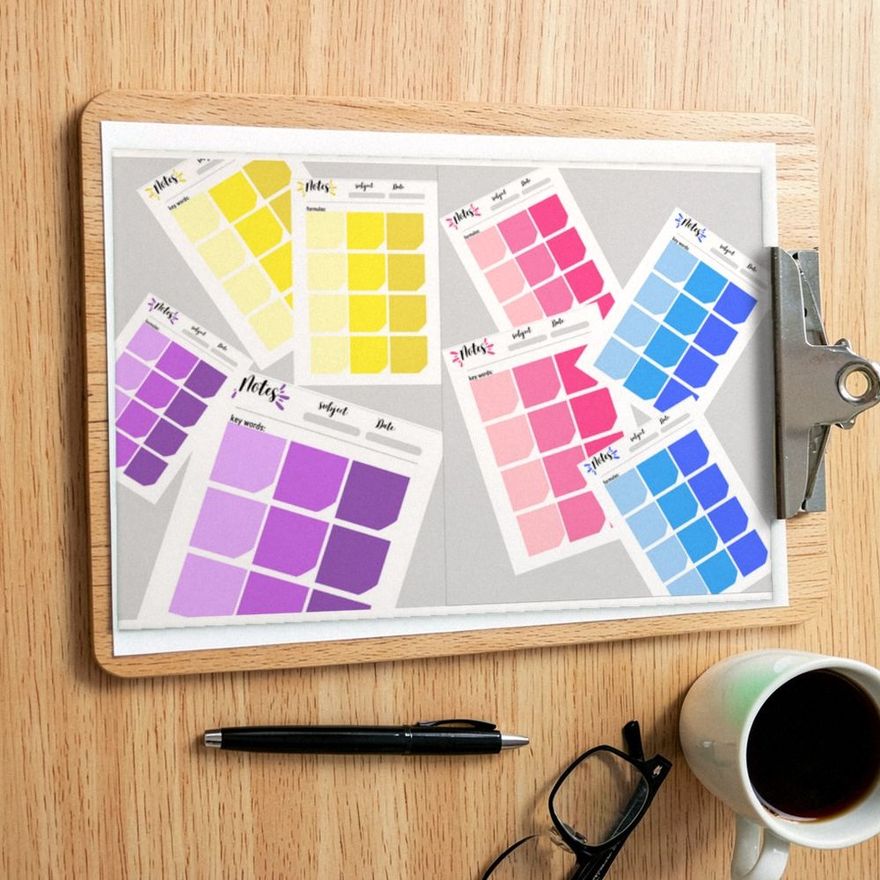
There is no single best way to take notes. The right method depends on how the class is delivered and what you will do with the notes afterward. Cornell notes are the strongest all-rounder because review is built into the page. Outlines suit organized lectures, mind maps suit ideas that connect in many directions, charts suit comparisons, and the sentence method is the fallback when a lecture moves too fast for anything else.
The Five Methods at a Glance
| Method | Best for | Effort in class | Ease of review |
|---|---|---|---|
| Cornell | Most lecture and reading notes | Medium | High: questions are already on the page |
| Outline | Well-structured lectures, textbook chapters | Low to medium | Medium: clear, but easy to reread passively |
| Mind map | Brainstorming, topics with many links, essay planning | Medium | Medium: good overview, little detail |
| Charting | Comparing items across the same categories | Low once the columns are set | High for facts and contrasts |
| Sentence | Fast, unstructured lectures | Low | Low until you rewrite it |
Most students end up using two: one for everyday classes and one for a subject that does not fit it.
The Cornell Method
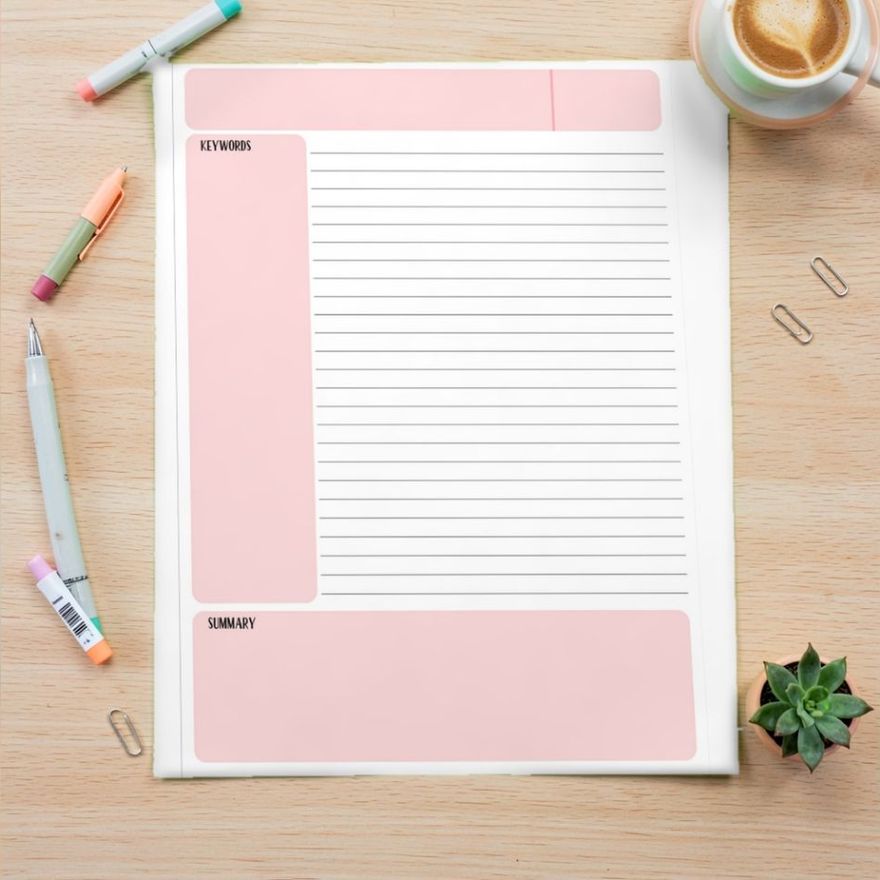
The Cornell method was devised in the 1950s by Walter Pauk, an education professor at Cornell University, and set out in his book How to Study in College. The page is divided into three areas, and the handout from Cornell's Learning Strategies Center gives the measurements:
- a cue column on the left, 2½ inches wide (about 6 cm)
- a note-taking column on the right, 6 inches wide (about 15 cm)
- a summary space across the bottom, 2 inches tall (about 5 cm)
The two columns add up to 8½ inches, the full width of a US letter sheet. On A4, which is 21 cm wide, 6 cm and 15 cm fill the page the same way.
Cornell's handout lists five steps:
- Record. During class, write in the note-taking column only, in short telegraphic sentences.
- Questions. As soon after class as possible, write questions in the cue column that the notes beside them answer.
- Recite. Cover the note-taking column with a sheet of paper and answer each question aloud, in your own words.
- Reflect. Ask what the facts mean, what principle is behind them and how they fit with what you already know.
- Review. Spend at least ten minutes every week going back over all your earlier notes.
After class, use the space at the bottom to summarize the page.
The payoff is step three. Covering the notes and answering the cues turns every page into a self-test, which is the kind of practice described in our guide to study tips that work.
You can rule the lines yourself or print pages with the layout already drawn. These three differ in the ruling of the notes area: a mixed bundle, lined, and squared grid for math and science.

Cornell Notes Template Bundle
See the listing ↗
Cornell Notes Template Lined/Ruled
See the listing ↗
Cornell Notes Template Squared Grid
See the listing ↗From the collection Study Notes & Digital Notes. New Creative Fabrica members get 10 free downloads, and any of these can be one of them.
The Outline Method
An outline puts main topics at the left margin and indents each level of detail beneath them:
- Main topic
- Supporting point
- Example or detail
- Supporting point
It is quick to write and shows at a glance what belongs to what. It works when the teacher follows a clear structure or when you are taking notes from a textbook that already has headings.
It struggles when a lecture jumps around, because you do not know where a point belongs until later. It is also weak for diagrams and formulas. Leave blank lines between main topics so that late additions have somewhere to go.
Outlines are easy to reread without thinking. To make them useful for review, turn each main topic into a question and try to rebuild the indented points from memory.

Mind Mapping
A mind map starts with the central idea in the middle of the page. Main branches run outward from it, and smaller branches split off those. Each branch carries a word or short phrase instead of a sentence.
The name was popularized by the British author Tony Buzan, beginning with a 1974 BBC television series, and his version leaned on color and key words.
Maps are good at showing how ideas relate, which makes them useful for planning an essay, summarizing a novel's themes or getting an overview of a unit before a test. Turn the paper sideways so there is room to spread out, and use a different color for each main branch.
They are a poor fit for dense factual lectures, where you need the detail more than the shape. Many students take notes another way in class and draw a map afterward as a one-page summary. Drawing that map from memory, then checking it against the notes, is a solid review exercise.
The Charting Method
Charting means setting up a table before you start. Each column is a category and each row is an item. For a history unit the columns might be date, cause, key people and outcome; for biology, structure, function and location.
When the content really is a set of comparable items, a chart is hard to beat. The gaps are visible right away, and similarities and differences sit side by side. One university study-skills guide recommends it when a test will cover both facts and the relationships between them.
The limit is that you need to know the categories in advance. That makes charting better for reading and for reorganizing notes after class than for a lecture you have not seen the plan of.

The Sentence Method
Every new point goes on its own line, written as a short sentence and numbered. That is the entire method.
Use it when the lecture is heavy with content that comes fast and you cannot tell what is a main idea and what is a detail. You will capture more than you would by trying to force a structure in real time.
The cost comes later. A numbered list has no hierarchy, so it is hard to study from. Within a day, rewrite it as an outline, a chart or Cornell notes. The rewriting is not wasted time: sorting the points is a form of studying.
For plain lined pages to catch a fast lecture, any of these will do.

Lecture Notes Printable
See the listing ↗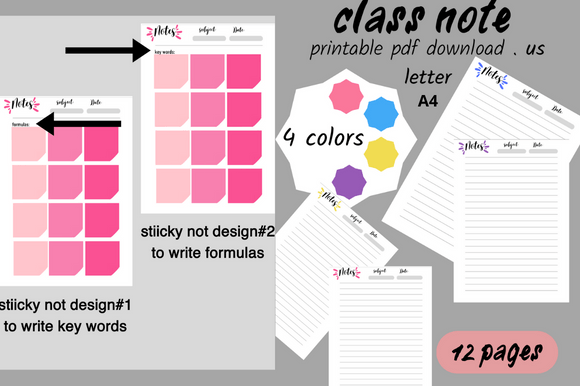
Class Note , Study Notes , Note Page
See the listing ↗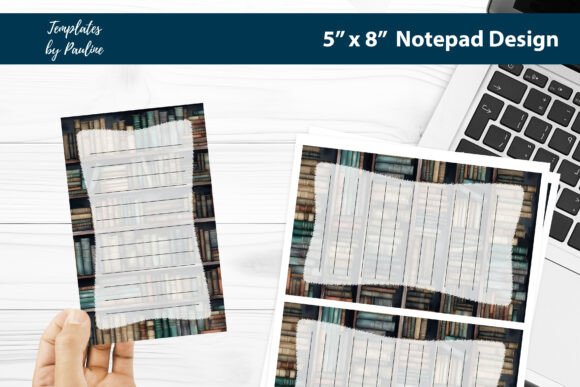
Study Notes Printable Notepad Template
See the listing ↗From the collection Study Notes & Digital Notes. New Creative Fabrica members get 10 free downloads, and any of these can be one of them.
Paper or Digital
Either works. The difference is in the habits each one encourages.
Paper is slow enough that you cannot write everything, so you have to choose and shorten, and that choosing is a first round of processing. Diagrams, arrows and equations are effortless. The drawback is that paper is harder to search and easy to lose.
Typing is faster, which makes it tempting to transcribe the lecture word for word without thinking about it. In three studies published in 2014, Pam Mueller and Daniel Oppenheimer found that students who took notes on laptops did worse on conceptual questions than students who wrote longhand, and they traced it to that word-for-word habit. Treat it as a tendency, not a verdict on laptops: typing also lets you capture more, and the fix is the same either way. If you type, write in your own phrases and stop to summarize. Typed notes are easy to search, reorganize and back up.
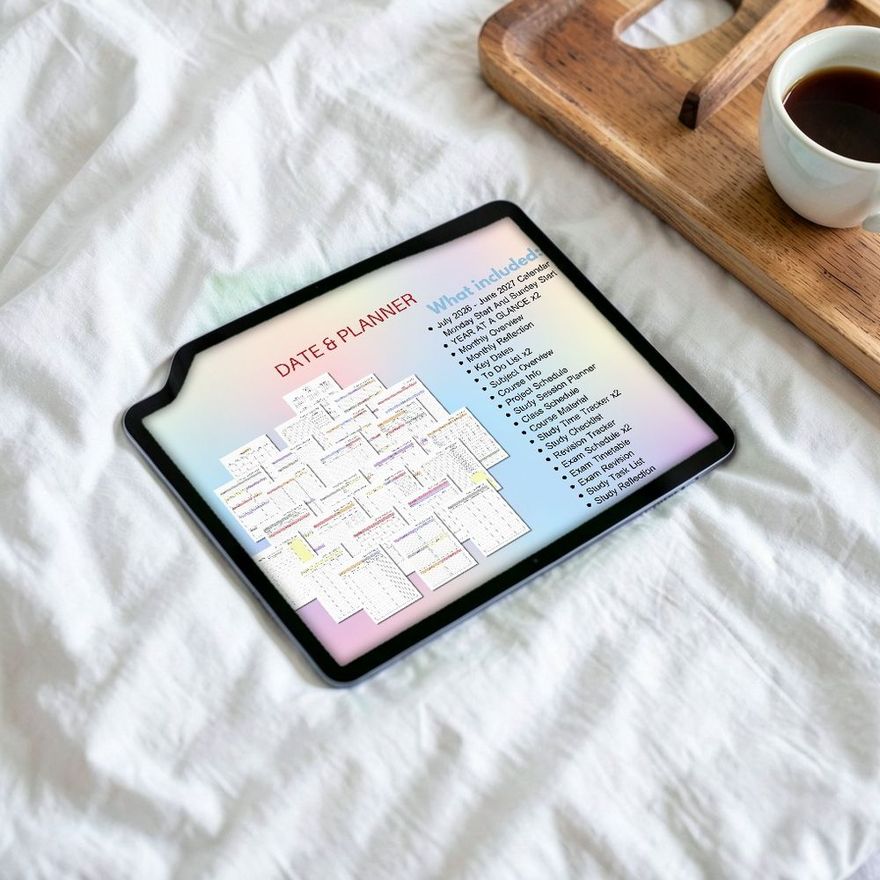
A tablet with a stylus sits between the two: handwriting and sketches, plus search and backup. A printable note page can be used as a paper template in a note-taking app. Goodnotes, for example, imports a PDF or image as a custom template, using only the first page of a multi-page PDF. Importing a whole file works the same way as in our guide to using a digital planner on an iPad.
Whatever you write with, the rule is the same: notes in your own words, shorter than what was said.
Paper and Pens for Handwritten Notes
If you go the paper route, printed note pages show less ink through on slightly heavier paper, and a punch gets them into a binder the same day.
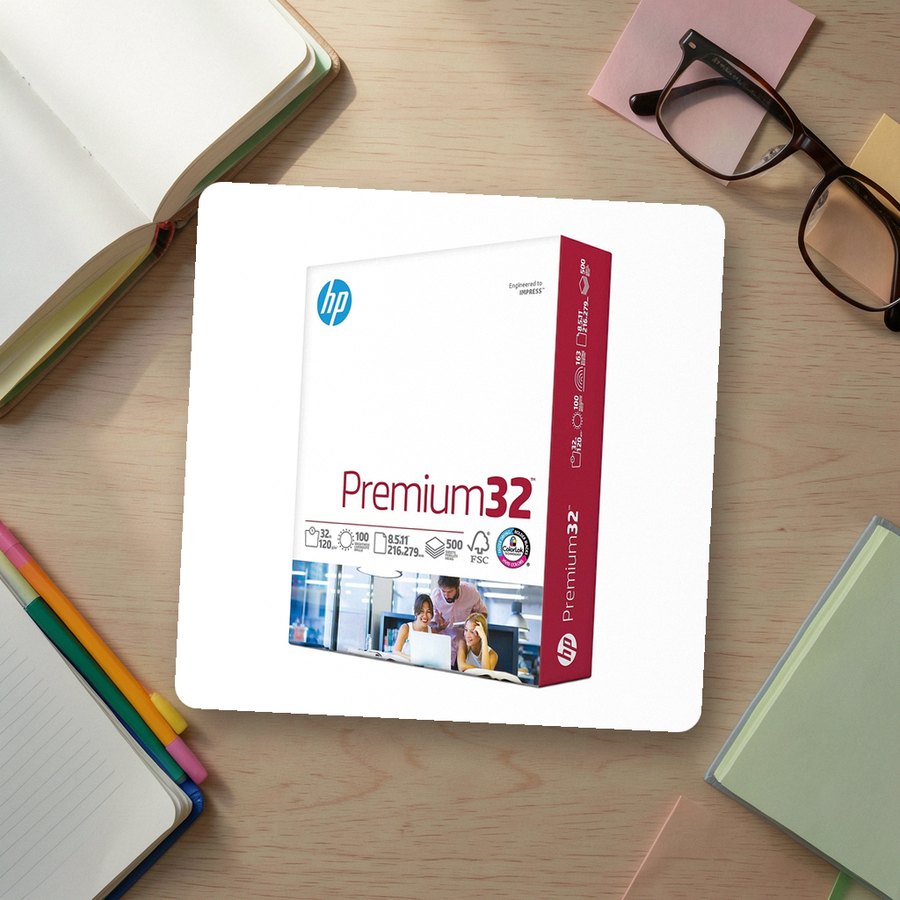 Premium printer paper, 32 lbHP PapersSee it on Amazon
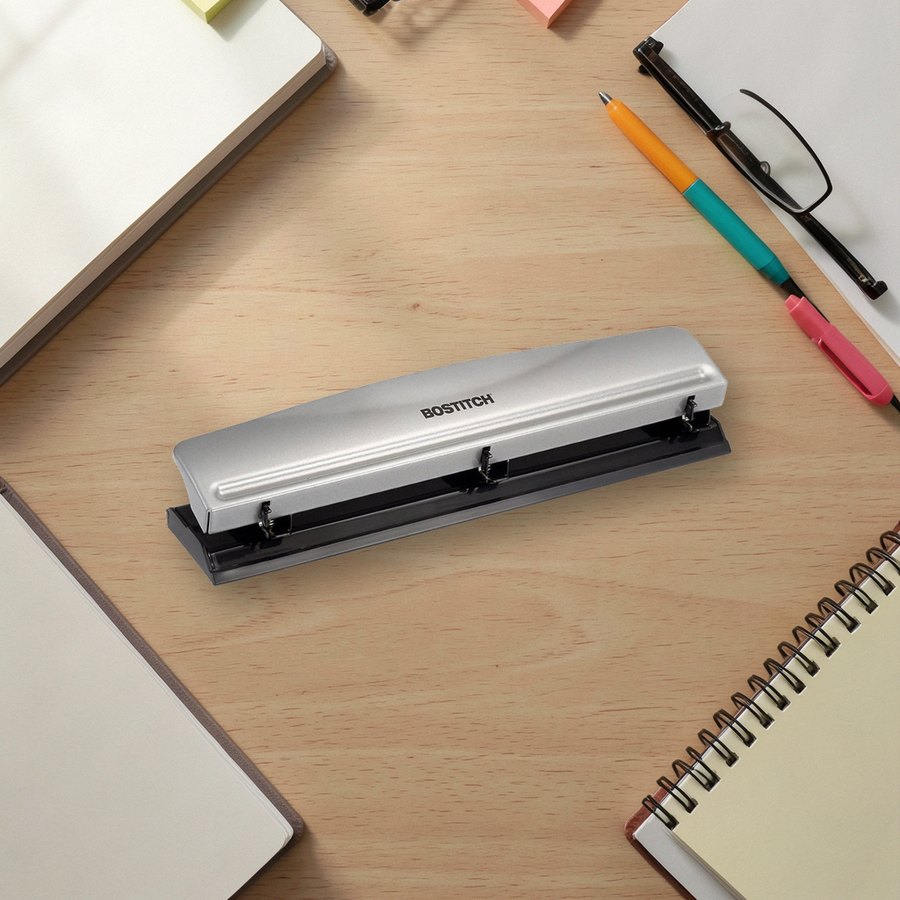 Three-hole punch for binder pagesBostitchSee it on Amazon
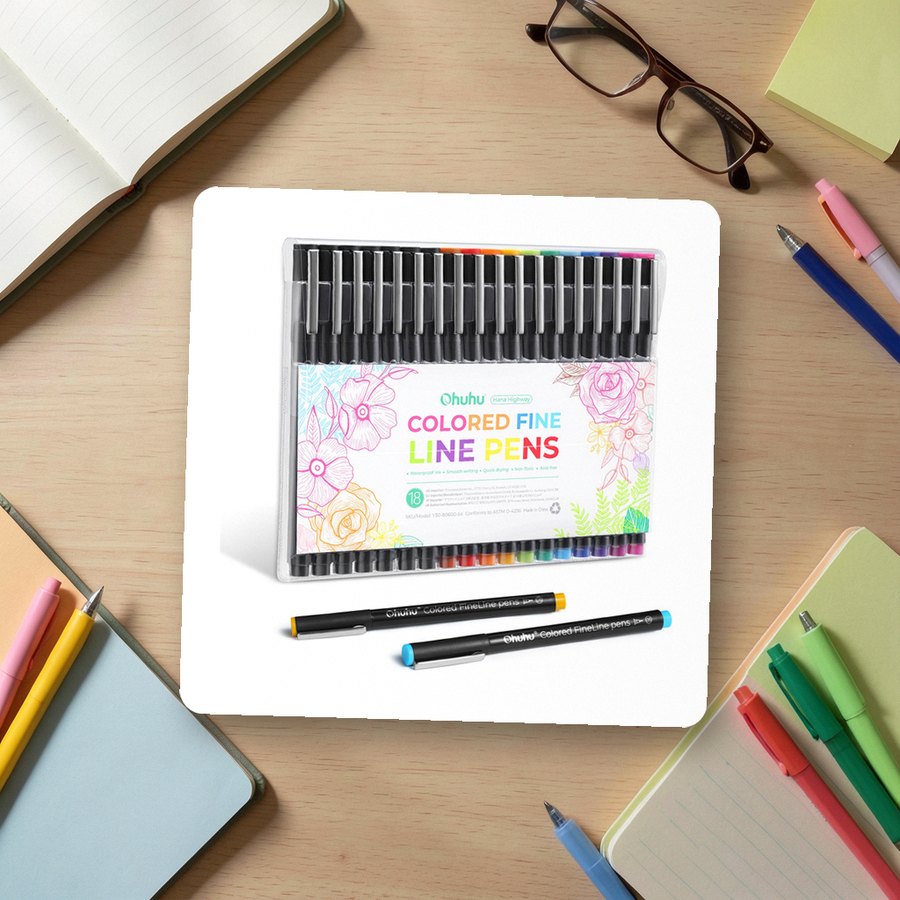 Colored fineliner pensOhuhuSee it on Amazon
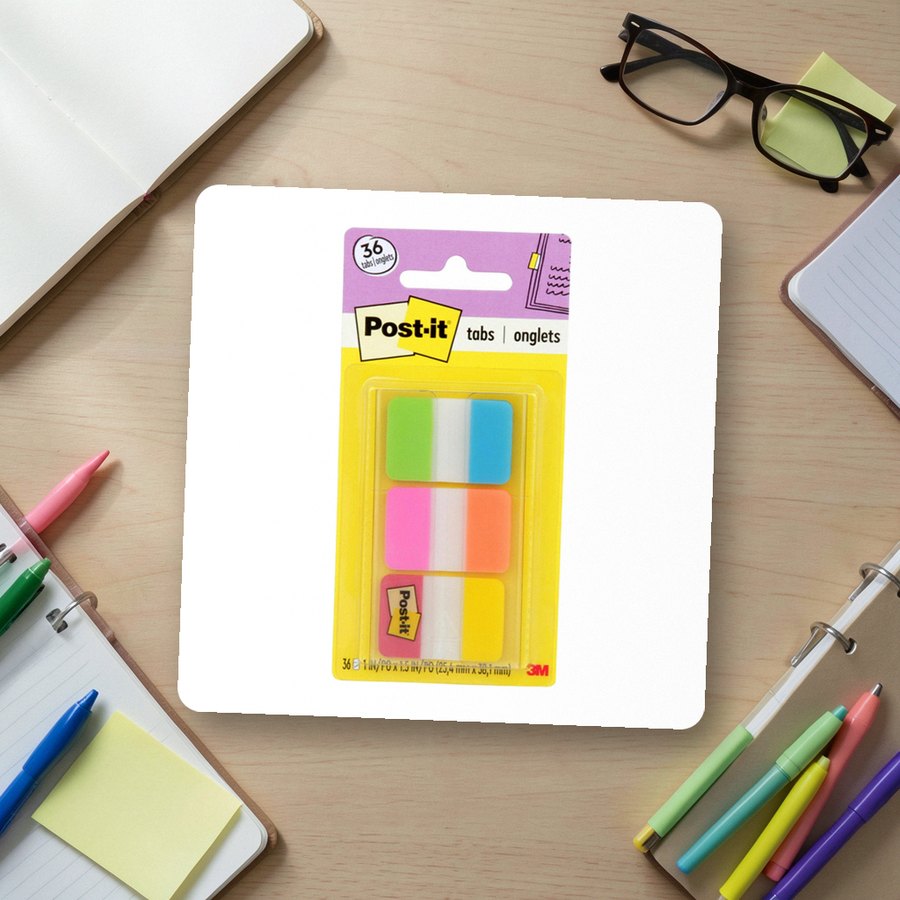 Sticky tabs in six colorsPost-itSee it on Amazon
As an Amazon Associate we earn from qualifying purchases.
Pick One and Test It for Two Weeks
Choose the method that matches your hardest class and use it for every session for two weeks. Then try to study from those notes. If you can turn them into questions and answer the questions, keep the method. If you find yourself rereading and remembering little, switch.
Loose facts that keep slipping, such as terms, dates and formulas, can go onto cards; how to make flashcards covers how. For pages to start with, browse the study notes templates and print five sheets of one layout before your next class. US letter paper is 8½ × 11 inches and A4 is 210 × 297 mm, so choose "fit to page" if a template was drawn for the other size.
Templates for This Topic
Study Notes & Digital Notes15 hand-picked · open the collection →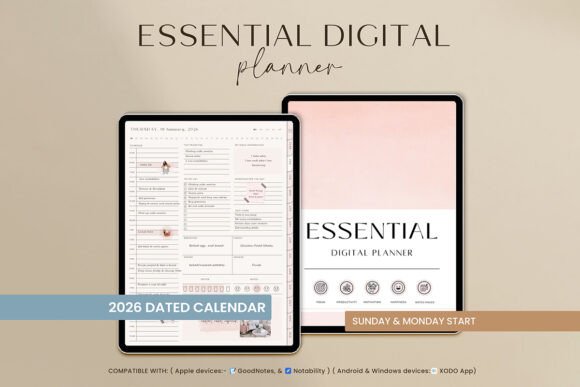 GoodNotes & Digital Planner14 hand-picked · open the collection →