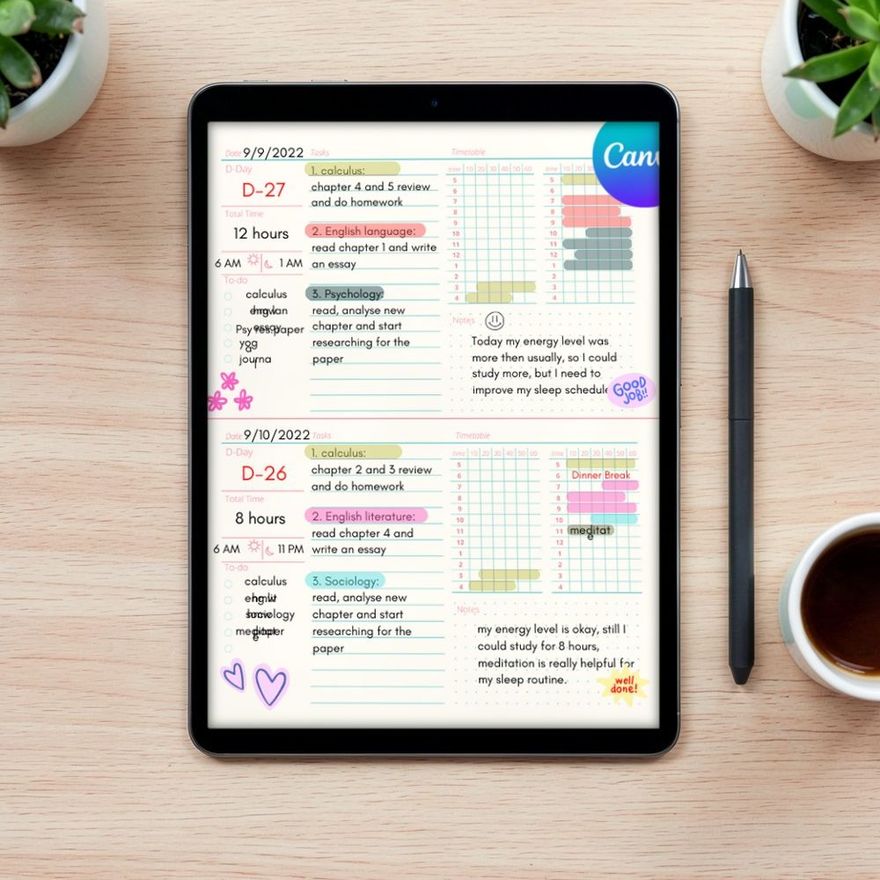
A revision plan, or an exam review plan as it is more often called in the US, answers one question: what will you study on each day between now and the test? To build one, put the exam dates on a calendar, break each subject into a list of topics, rate how well you know each topic, and give the weakest ones the most sessions. Reserve the final week for practice tests and review, not new material.
Put Every Exam Date on One Page
Start with a calendar that shows all the weeks from today to your last exam on a single page. Mark each exam with its date, time and subject. Then mark the days you cannot study: travel, a game, a shift at work, a family event.
Count back from each exam. The last full week before it is for mixed practice. Everything before that is for working through topics. Seeing all the exams together matters because they compete for the same days, and the subject with the earliest date usually needs to start first.
A term or monthly view is the right size for this. These planners are ones to look at if you do not have a calendar page yet.
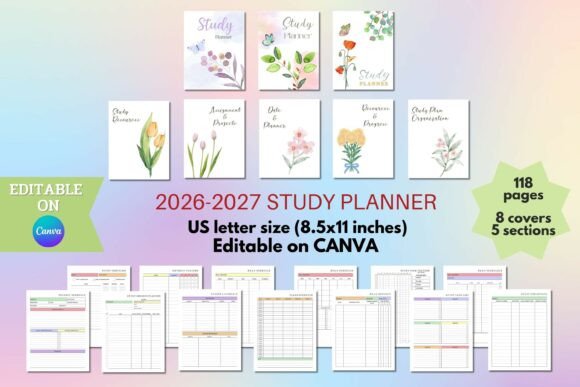
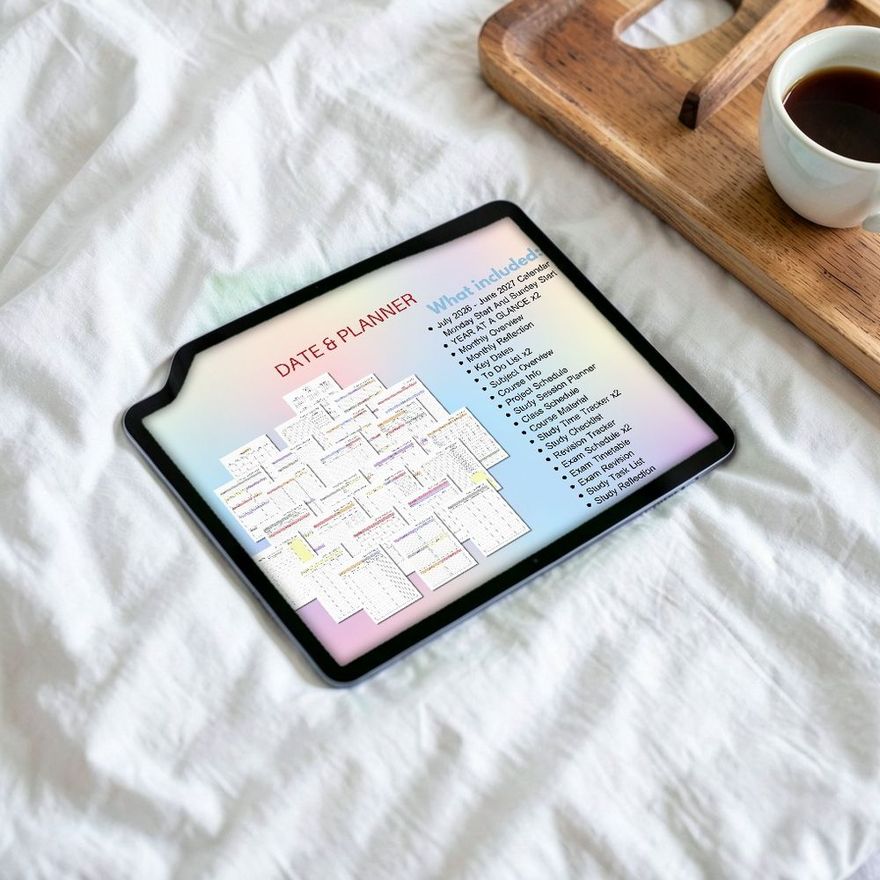
2026 - 2027 Study Planner
See the listing ↗
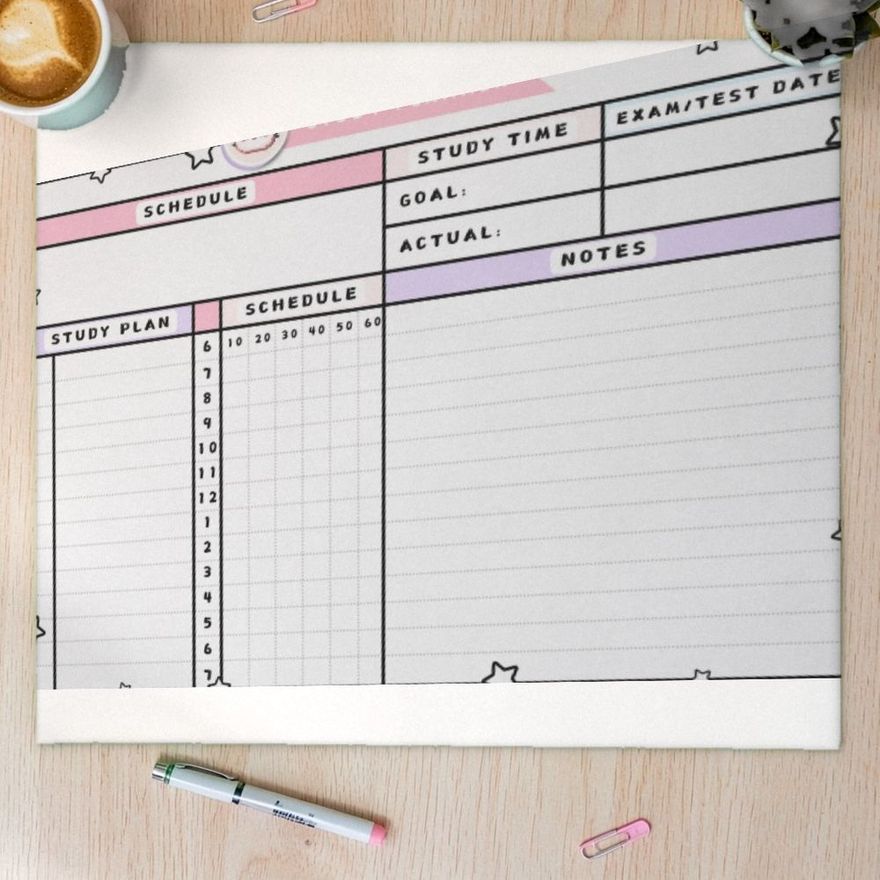
Study Planner Printable
See the listing ↗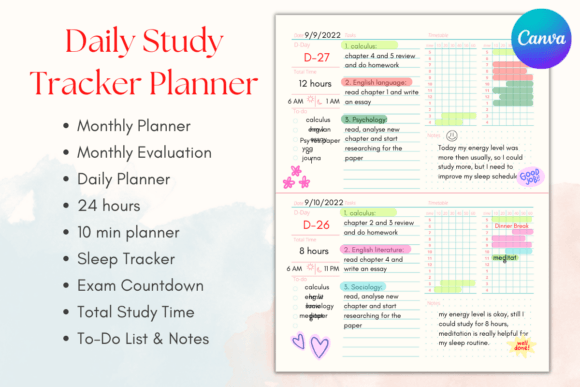
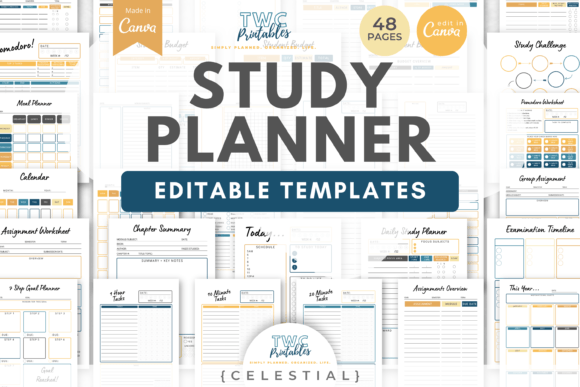
Editable Study Planner Canva Template
See the listing ↗From the collection Study Planner & Timetable. New Creative Fabrica members get 10 free downloads, and any of these can be one of them.
Turn Each Subject Into a Topic List
"Revise chemistry" is too big to schedule. Break each subject into topics small enough to cover in one or two sessions.
Good sources for the list:
- the syllabus or course outline
- the exam specification or study guide, if your teacher or exam board provides one
- chapter headings in the textbook
- the titles of your own notes, in date order
Write the topics down the left side of a page, one per line. If a line still feels vague, such as "organic chemistry," split it until each line is something you could sit down and do. If the list runs past thirty or so lines, group the smallest ones so the page stays usable.

Rate Every Topic Red, Yellow or Green
Go down the list and mark each topic with a color:
- Red: you could not answer a question on this right now.
- Yellow: you know the outline but make mistakes or forget details.
- Green: you could explain it and solve a typical question today.
Be strict. A topic is green only if you can produce it from memory, not because the notes look familiar when you read them. If you are unsure, try two practice questions on the topic and let the result decide.
The ratings do two jobs. They tell you where to spend time, and they give you a way to see progress: re-rate the list every week and watch lines move from red toward green.
Count Your Sessions and Hand Them Out
Now work out how many study sessions you have. Count the available days, multiply by the number of sessions you can realistically do on each, and take away about a fifth as a buffer for illness, bad days and topics that run long.
Then distribute them. A simple weighting:
- red topic: three sessions
- yellow topic: two sessions
- green topic: one short review
If the total is more than the sessions you have, you have learned something useful early. Cut the green reviews first, then decide which red topics matter most by how heavily they are tested.
Place the sessions on the calendar with two rules. Start with red topics, so they get the most repeat visits. And split the sessions for one topic across different days instead of doing them back to back, because returning after a gap strengthens memory more than one long sitting. Spacing research gives a rough size for the gap: recall was best when it was about 10 to 20 percent of the time the material had to be remembered. For an exam four weeks away, that is a return visit roughly every three to six days; in the last week, a day apart is enough. For how to fit sessions into an ordinary week, see how to make a study schedule.
Use Past Papers Early, Not Just at the End
Past exam papers, released questions and practice tests are the closest thing you have to the real exam. Practice testing is also one of only two study techniques rated high in the 2013 review of learning methods by John Dunlosky and colleagues; the other is spreading study out over time. Many students save past papers for the last few days. They are more useful earlier.
- At the start: try one paper, or part of one, without preparation. The result is not a grade; it is a map of what you do not know, and it makes your color ratings honest.
- In the middle: use single questions by topic as the recall part of each session.
- In the final week: sit full papers under exam conditions, with the real time limit, no notes and no phone.
Marking matters as much as doing. Check each answer against the mark scheme or answer key, and keep an error log: the question, what went wrong, and the correct method. Mistakes fall into a few kinds, such as not knowing the content, misreading the question, running out of time or slipping on arithmetic, and each kind has a different fix.
If no past papers exist for your course, use end-of-chapter questions, old quizzes and homework problems, or write five questions per topic yourself. Writing likely questions is revision too.

A Four-Week Countdown
Here is how the phases fit together when you have four weeks. With more or less time, stretch or squeeze the first two rows.
| When | Main work | Practice |
|---|---|---|
| Week 4 | Topic lists and ratings; first pass through red topics | One diagnostic paper or section |
| Week 3 | Second pass through red topics; yellow topics | Topic questions in every session |
| Week 2 | Remaining yellow topics; re-rate the list; green reviews | A timed section, marked with an error log |
| Final week | No new topics; weak spots from the error log | Full timed papers |
| Day before | Light review of summary sheets | None |
The methods you use inside each session decide how much of it sticks. Self-testing beats rereading, and the guide to study tips that work covers the main ones. For terms, dates and formulas, well-made flashcards let you review in spare minutes.
The Final Week
By now the topic work should be done. This week has three jobs.
First, sit full practice papers at the same time of day as the real exam if you can. Second, go through the error log and redo the questions you got wrong, without looking at the corrections. Third, condense each subject onto one or two summary sheets: the formulas, definitions and steps you still hesitate over.
Keep your sleep schedule steady this week. The American Academy of Sleep Medicine recommends 8 to 10 hours per 24 hours for teenagers aged 13 to 18, and the CDC lists 7 or more for adults. Too little sleep makes it harder to focus and think clearly, so late nights now cost you on the day that counts.
A page per day helps in this stretch, because the tasks are specific and short.
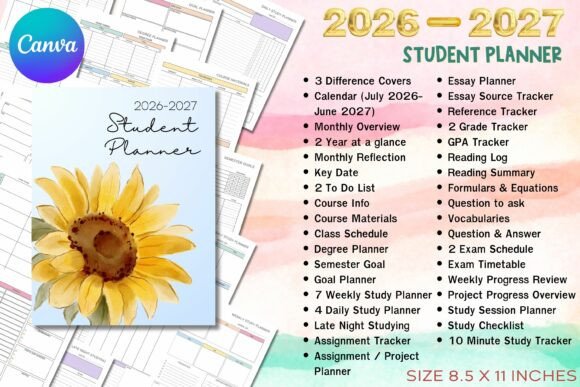
2026-2027 Student Planner
See the listing ↗
College Student Planner Canva Template
See the listing ↗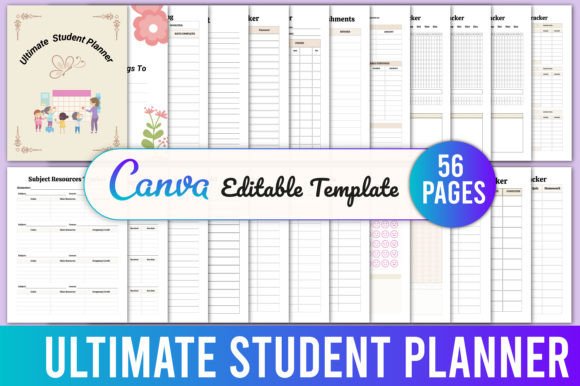
Ultimate Student Planner Canva
See the listing ↗From the collection Student & School Planner. New Creative Fabrica members get 10 free downloads, and any of these can be one of them.
Supplies for a Paper Revision Plan
A plan on paper needs very little: a page large enough for every exam date, colors for the three ratings, and cards for the facts that go on summary sheets.
 18-month desk pad calendarTajaSee it on Amazon
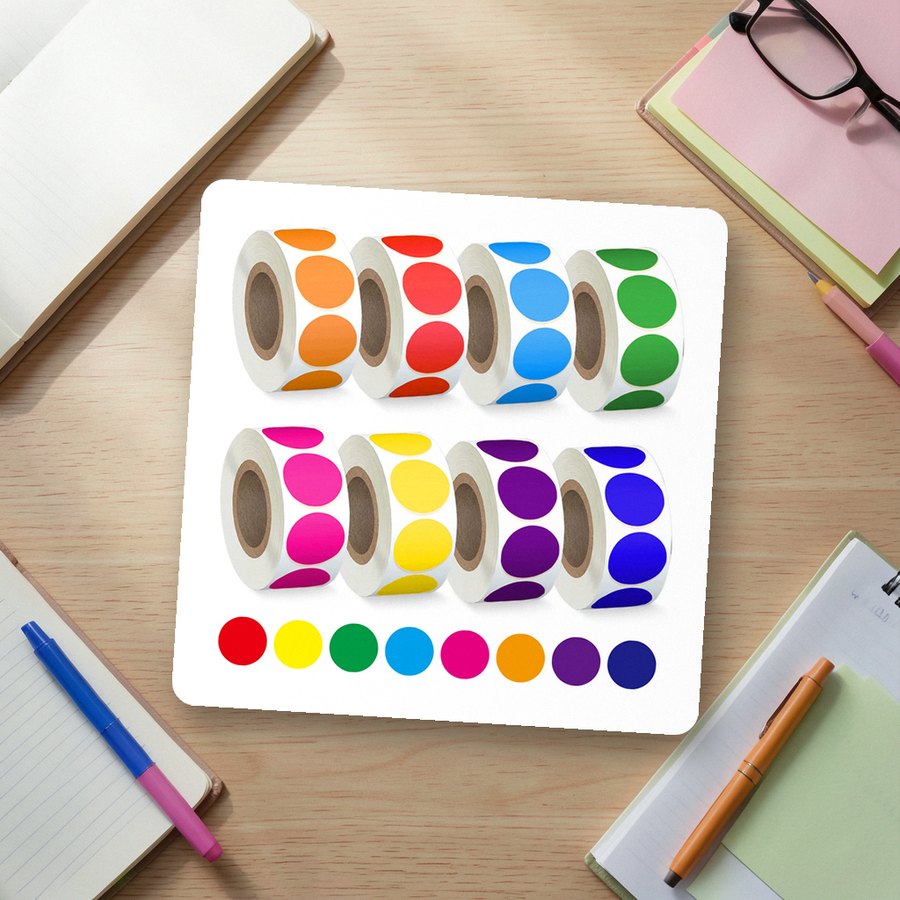 Color-coding dot stickersLrogoeSee it on Amazon
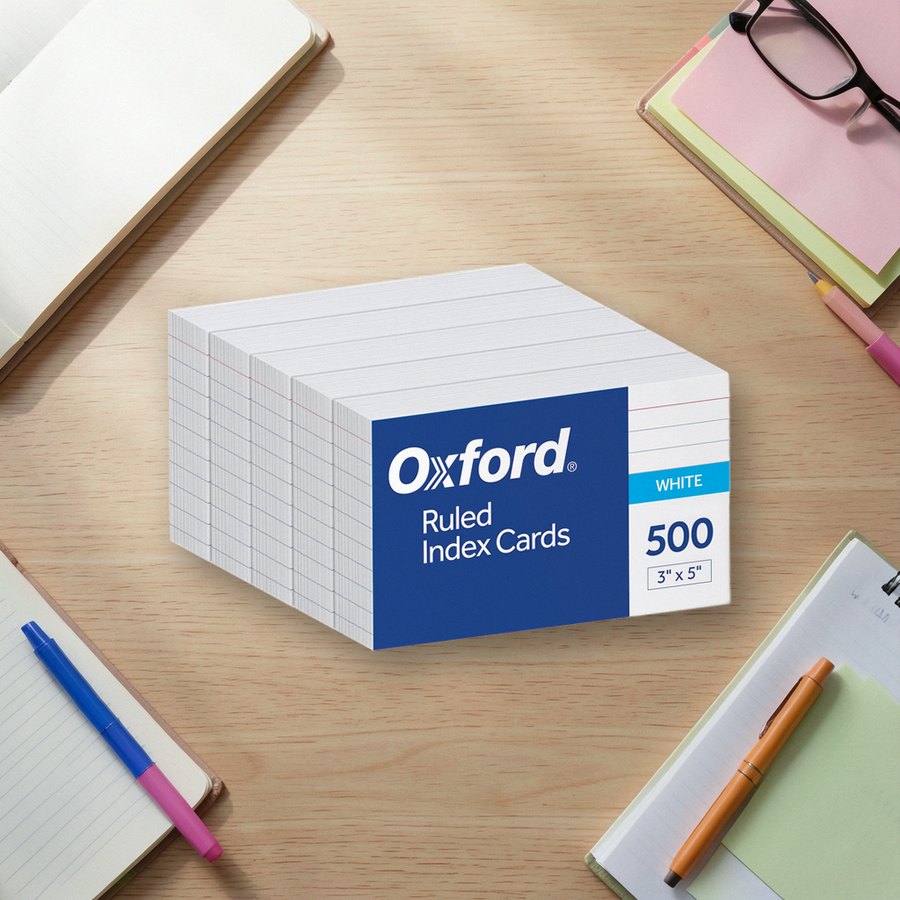 Ruled index cards, 3 x 5 inchOxfordSee it on Amazon
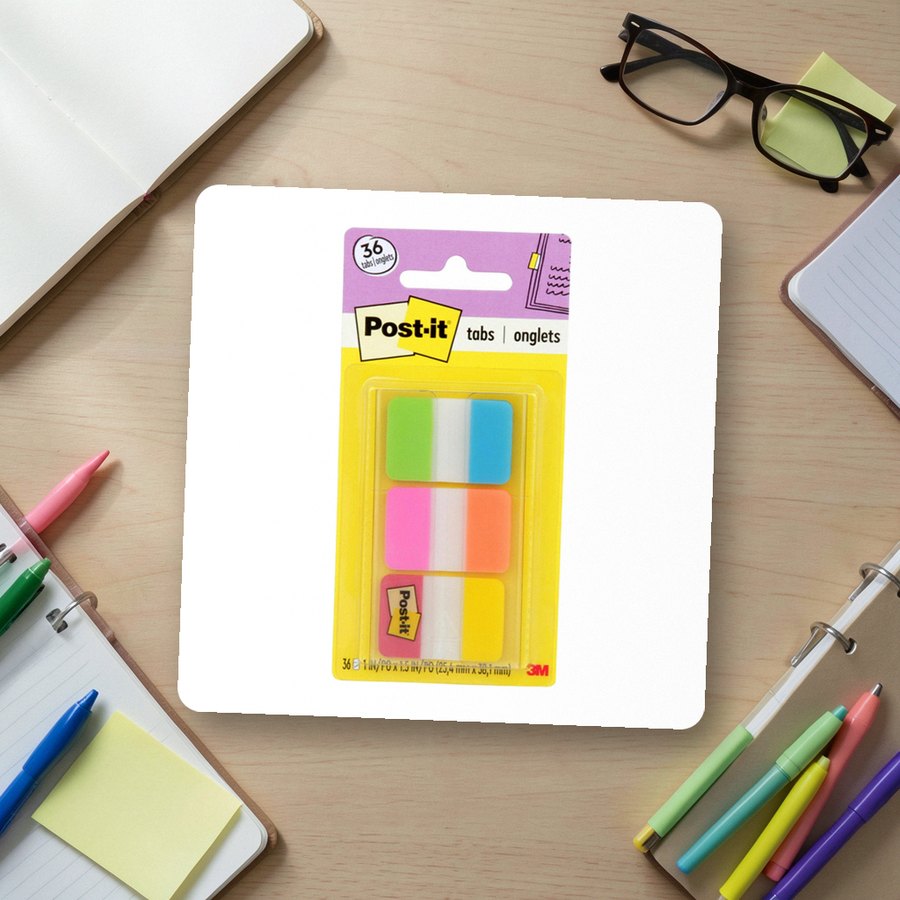 Sticky tabs in six colorsPost-itSee it on Amazon
As an Amazon Associate we earn from qualifying purchases.
Tabs are useful in the error log, where the questions to redo need to be found again quickly.
The Day Before and the Morning Of
The day before is for light review and logistics, not for learning anything new.
- Read through your summary sheets once or twice.
- Check the time, room and what you are allowed to bring.
- Pack the bag: pens, pencils, calculator with working batteries, ID, water.
- Stop at a set time and go to bed at your usual hour.
In the morning, eat what you normally eat, leave early, and glance at one summary sheet at most. Avoid the hallway conversations about what might be on the paper; they add worry and no knowledge.
To begin today, write the topic list for your earliest exam and color it in. That one page tells you how big the job is, and a study planner will hold the rest.
Templates for This Topic
 Study Planner & Timetable15 hand-picked · open the collection →Student & School Planner15 hand-picked · open the collection →