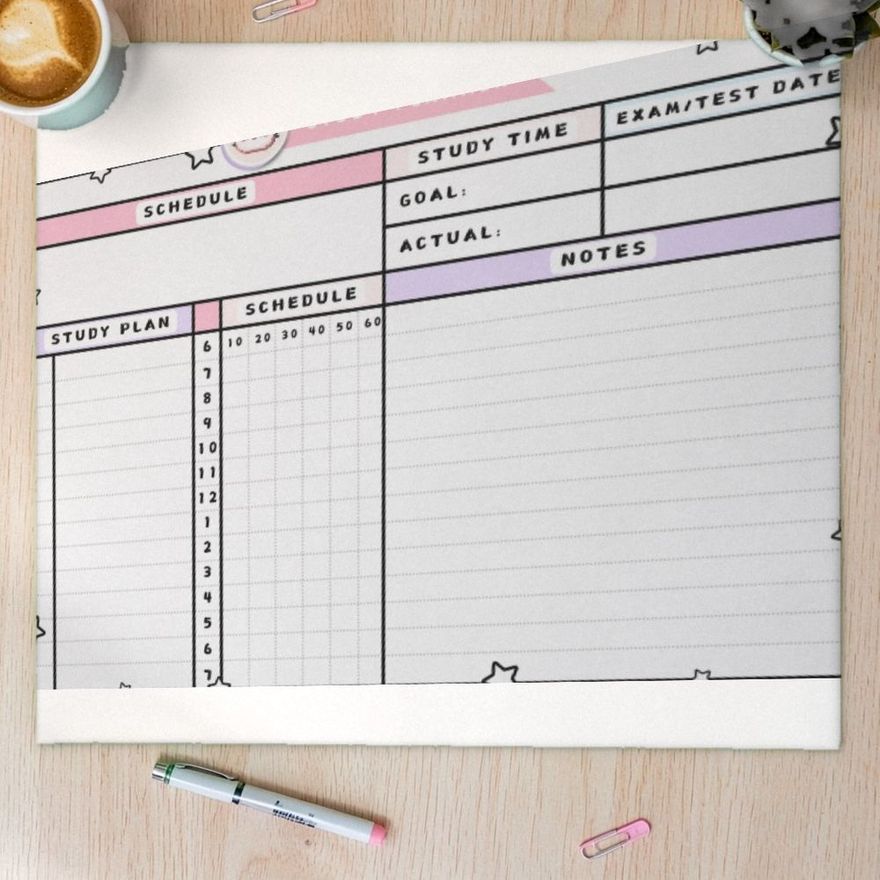
A study schedule you will follow is built from the hours you really have, not the hours you wish you had. Write down everything that is already fixed, count what is left, give each subject a share of that time, and turn the shares into named blocks on specific days. Then check it once a week and change what did not work. The setup takes about half an hour, and the steps below go in that order.
Start With What Is Already Fixed
Take a blank weekly grid, with the days across the top and the hours down the side, and fill in everything that will happen whether you plan it or not:
- classes, labs and the commute to them
- work shifts, practice, rehearsals, club meetings
- meals, chores and family commitments
- sleep, with a realistic bedtime and wake-up time
Do this before you think about studying at all. Most abandoned schedules fail at this step: they assume a free Tuesday evening that has had band practice in it since September.
Give sleep its real size on the grid. The American Academy of Sleep Medicine recommends 8 to 10 hours per 24 hours for teenagers aged 13 to 18, and the CDC lists 7 or more hours for adults aged 18 to 60. With a 6:30 a.m. alarm, that puts a teenager's lights-out no later than 10:30 p.m.
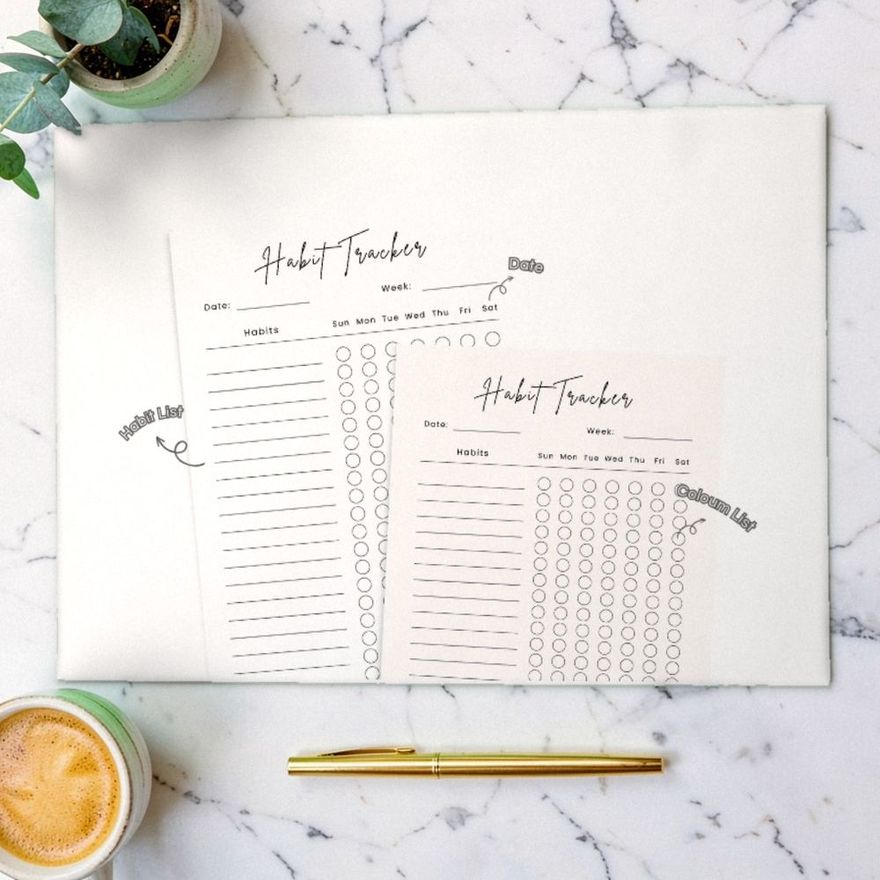
If you want the whole week on one spread, school and everything else together, an undated weekly page works well for this first pass, because you can start it in any week of the term.
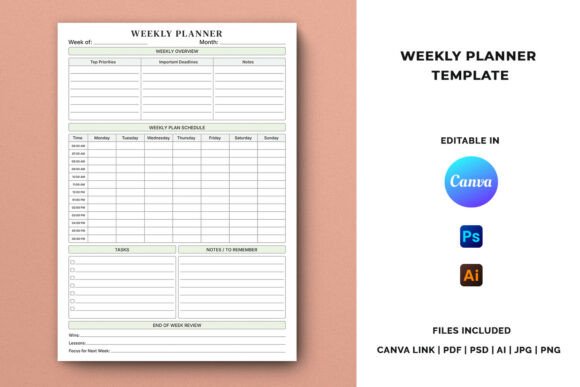
Undated Weekly Planner Template
See the listing ↗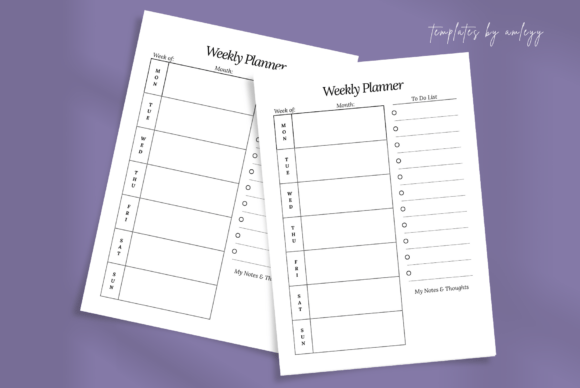
Minimal Weekly Planner Template
See the listing ↗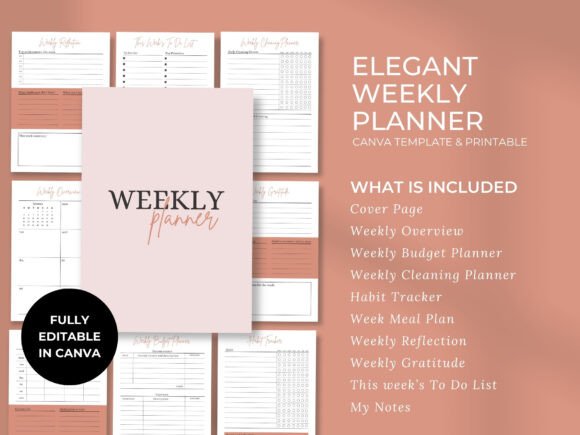
Elegant Weekly Planner Template Canva
See the listing ↗From the collection Weekly Planner Templates. New Creative Fabrica members get 10 free downloads, and any of these can be one of them.
Count the Hours You Really Have
What is left on the grid is free time, and not all of it is study time. Cross out a share for rest, friends and doing nothing. You will take that time anyway, and a plan that pretends otherwise breaks on day two.
Now count the open slots that are at least 30 minutes long. A high-school weekday might leave two or three usable hours. A college week often has gaps between classes that add up to more than the evenings do, and those daytime gaps are easy to lose to scrolling in a hallway.
Write the weekly total at the top of the page. That number is your budget, and everything that follows has to fit inside it.
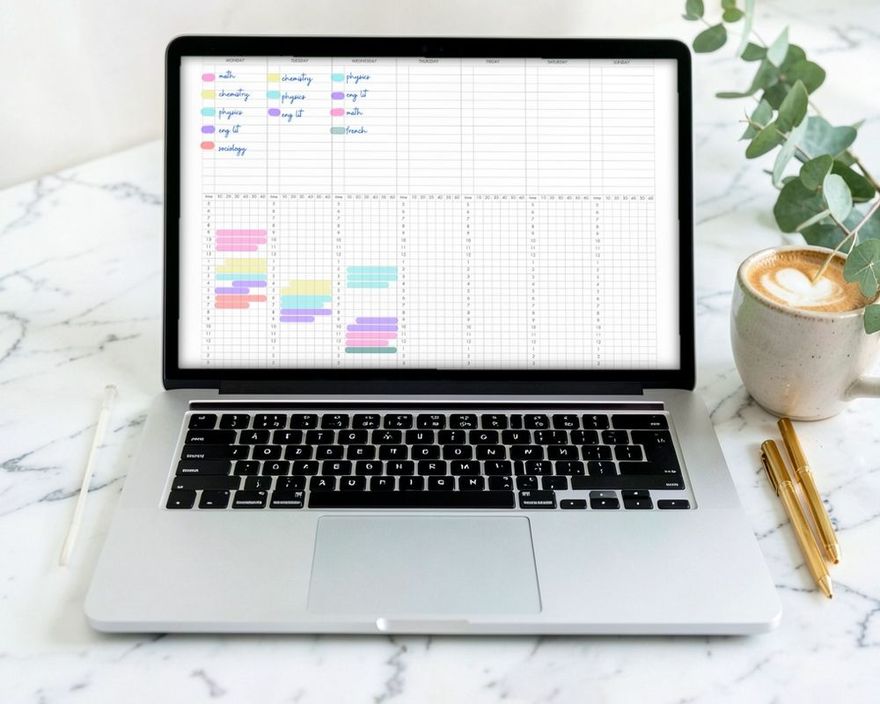
Estimate the Load for Each Subject
List your subjects and give each one a number of hours per week. Three things decide the share:
- How much work it assigns. A class with weekly problem sets and a lab report needs more than one with a single reading.
- How hard it is for you. Your weakest subject gets extra time, even if you would rather spend it elsewhere.
- What is coming up. A test in ten days moves a subject up the list for those ten days.
For college courses there is an official starting point. The federal definition of a credit hour assumes one hour of class plus a minimum of two hours of out-of-class work each week, so a 15-credit semester implies at least 30 hours of study outside the classroom. Treat that as a first guess, then correct it after two weeks of seeing how long the work really takes.
If the shares add up to more than your budget, cut something or start earlier in the day. Do not write a schedule you already know is impossible.
Turn the Hours Into Named Blocks
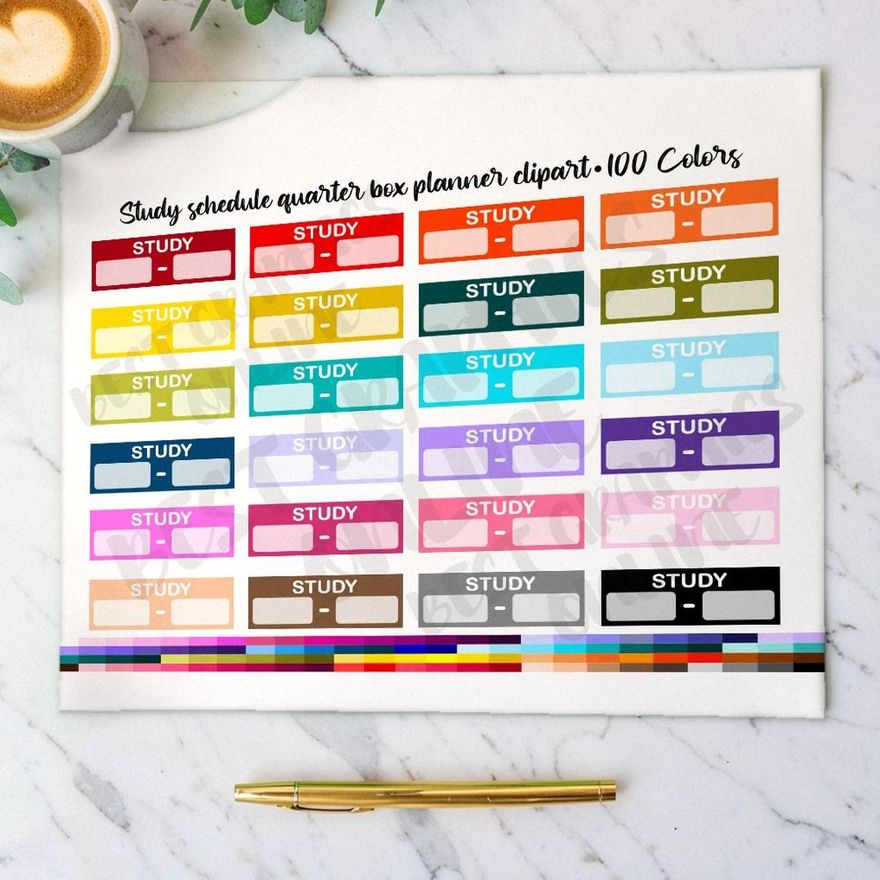
A block is a start time, an end time and one specific task. "Study biology" is not a block. "Tuesday 4:30–5:15, biology: questions 1–12 from chapter 6" is. The difference matters at 4:30, when a vague block invites ten minutes of deciding what to do and a named one lets you open the book and begin.
Keep blocks between 25 and 50 minutes. Much shorter and you spend the time settling in; much longer and, for most people, attention fades before the block ends. The short end of that range is the classic 25-minute Pomodoro.
Spread each subject across the week instead of giving it one long day. Three short sessions of math usually do more than a single Sunday marathon of the same length, because coming back after a gap forces you to pull the material out of memory again. Short sessions also leave time to ask a teacher about whatever you got stuck on. Research reviews call this distributed practice and rate it among the most dependable study techniques. The guide to study tips that work explains why spacing has that effect.
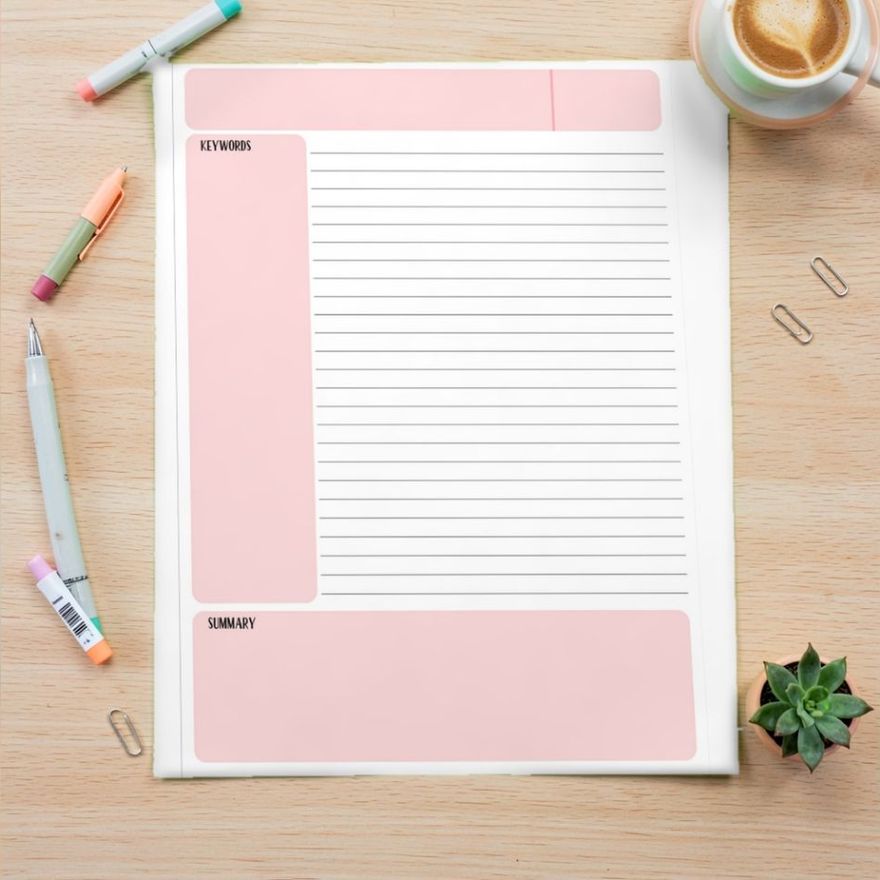
A page that already has the week laid out saves drawing the grid by hand. These are schedule pages from our collection, in three different looks.
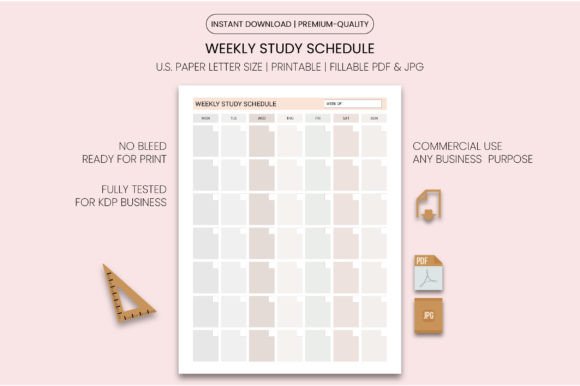
Weekly Study Schedule Template
See the listing ↗
Pink Study Schedule
See the listing ↗
Blue Study Schedule
See the listing ↗From the collection Study Planner & Timetable. New Creative Fabrica members get 10 free downloads, and any of these can be one of them.
Put the Hardest Subject Where Your Energy Is
Most people have a stretch of the day when concentrating is easier. For some it is early morning, for others the hour after dinner. If you are not sure, notice for one week when work feels lightest and when you keep rereading the same line.
Put the subject you find hardest, or the task you most want to avoid, into that stretch. Save low-energy slots for work that needs less thought: tidying notes, copying out a formula sheet, a quick round of flashcards.
The reverse arrangement is common and wasteful. Easy tasks get the sharp hour because they are pleasant to start, and the hard problem set lands at 10 p.m.

Schedule Breaks and Leave a Buffer
Breaks belong on the schedule, not in the cracks between tasks. Five to ten minutes between blocks is enough to stand up, drink some water and look at something farther away than a screen. After three or four blocks, take a longer one of 15 to 30 minutes, which is the long break the Pomodoro Technique prescribes after every four work periods.
Leave one or two blocks a week empty on purpose. Something always runs over, and a buffer block absorbs it without knocking the rest of the week out of place.
Decide when the day ends, too. A fixed stopping time, such as 9 p.m., makes it easier to start, because the work has a visible edge.
A Sample Weekday
Here is one way a high-school weekday can look once the pieces are in place. The times are an example; the pattern is what to copy.
| Time | What happens | Type |
|---|---|---|
| 8:15–3:15 | School | Fixed |
| 3:30–4:45 | Practice or club | Fixed |
| 4:45–5:15 | Snack and rest | Break |
| 5:15–6:00 | Chemistry: problem set, questions 1–10 | Study block 1 (hardest subject) |
| 6:00–6:45 | Dinner | Break |
| 6:45–7:30 | History: outline the first two essay paragraphs | Study block 2 |
| 7:40–8:10 | Spanish: review vocabulary cards | Study block 3 (light) |
| 8:10–10:00 | Free time, pack the bag for tomorrow | Off |
| 10:00 | Lights out, for 8.5 hours of sleep before a 6:30 alarm | Fixed |
That is three blocks and two hours of real work: 45, 45 and 30 minutes. The hardest subject goes first, while there is still energy for it, and the lightest task closes the evening.
Tools That Keep the Schedule in Sight
A schedule works when you can see it without opening anything, and a block works when something other than your phone keeps the time.
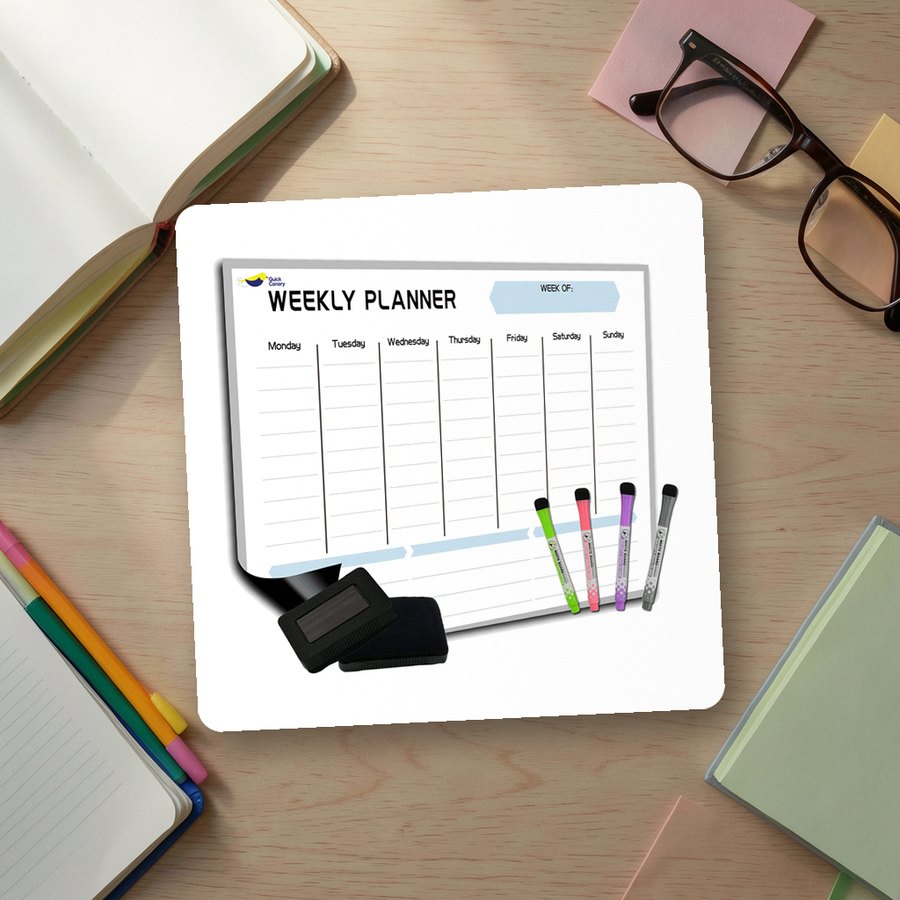 Magnetic weekly dry-erase plannerQuick CanarySee it on Amazon
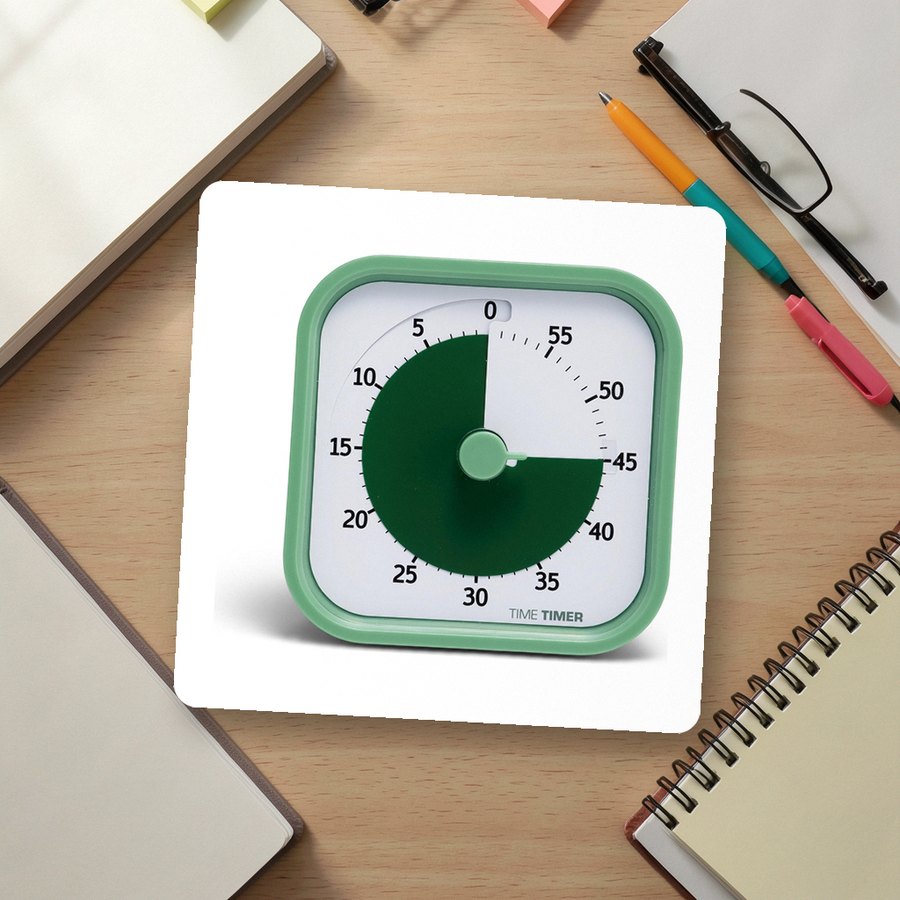 60-minute visual timerTIME TIMERSee it on Amazon
 18-month desk pad calendarTajaSee it on Amazon
 Sticky notes, 3 x 3 inchPost-itSee it on Amazon
As an Amazon Associate we earn from qualifying purchases.
Review the Schedule Every Week
No first draft survives a real week. Set aside ten minutes on Sunday and ask three questions:
- Which blocks did I skip, and why? A block skipped twice is in the wrong place.
- Which tasks took longer than their block? That subject needs a bigger share.
- What is due or tested in the next two weeks?
Then move things around. A schedule is a draft you keep editing, and changing it is the purpose of the review, not a sign that the plan failed.
For the week-to-week routine, see how to use a study planner. When exams get close, the weekly schedule turns into a countdown, and the guide to building an exam revision plan picks up from there.
To start today, choose a layout from our study planner and timetable templates or draw the grid on plain paper, and fill in only the fixed commitments. The rest gets easier once those are on the page.
Templates for This Topic
 Study Planner & Timetable15 hand-picked · open the collection →Weekly Planner Templates15 hand-picked · open the collection →